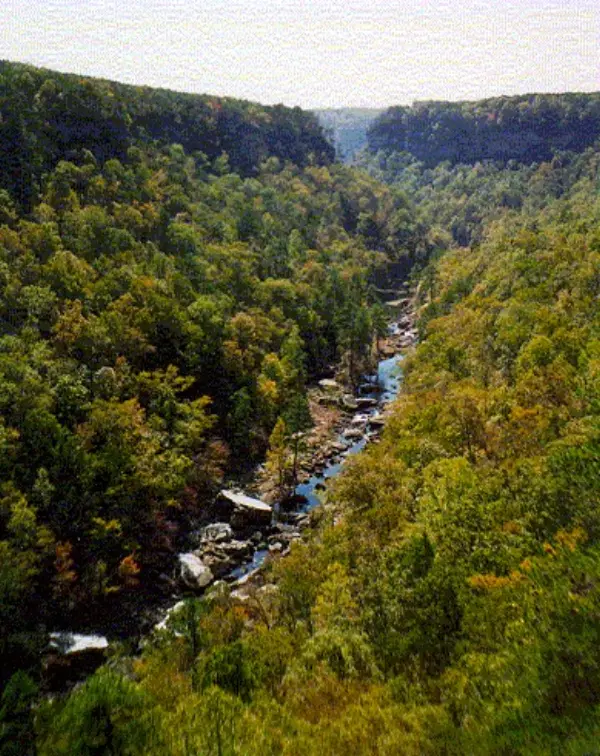
BrookVT
Adams Hole
There are no signs pointing the way, no entry gates, and no snack bars. Just the brook, the trees, and the sound of water moving over stone.
View detailsThis page lists 7 creek swimming holes in Vermont, where the swim season runs mid-june through early september. Open each listing for directions, fees, and current conditions before you travel.
Vermont has 7 documented creek swimming holes in this directory — a creek swimming hole is a smaller stream or brook pool — usually shaded, shallower, and several degrees colder than nearby lakes. The Vermont swim season runs Mid-June through early September, peaking July to August. Access points cluster near St. Johnsbury, East Barnet, Danville, Manchester, and Middlebury. Every listing below links to a full page with directions, fee notes, access rules, and safety context.
Sort live from your phone with near me, browse all U.S. creek swimming holes, or open the Vermont state page.
Guides: Vermont swimming holes guide · Swimming holes near Burlington · Swimming holes near St. Johnsbury · Swimming holes near Wilmington
There are no signs pointing the way, no entry gates, and no snack bars. Just the brook, the trees, and the sound of water moving over stone.
View detailsUnofficial and unimproved, this natural gem rewards those willing to navigate tricky backroads and arrive self-sufficient. No signage, no parking lot, no concession stand.
View detailsFed by the cold, clear waters of Sucker Brook, this unofficial . There are no signs directing you to a snack bar, no lifeguard whistles, no manicured lawns.
View detailsSituated where the towns of Lowell, Troy, and Jay converge, this beloved unofficial gathering place sits along Bugbee Brook, a clear, cold tributary of the Missisquoi River.
View detailsThis is not a developed recreation area with signage, parking lots, or crowds. It's a simple, roadside pause along Osgood Brook, where the water gathers into a small, inviting pool beside a rustic culvert, framed by the unhurried rhythms of central Vermont's countryside.
View detailsSet along the clear, cold waters of Minister Brook near Worcester, this unofficial . A remnant of an earlier era that nature has spent decades reclaiming and reshaping.
View detailsIts name tells the story: this informal . There are no signs pointing you here, no lifeguards on duty, and no manicured amenities.
View detailsVermont is unusually dense with swimming holes — the Mad, White, Lamoille, Winooski, and Deerfield corridors, the Warren Falls and Bristol Falls ledges, Bingham Falls near Stowe, and the Ledges on Lake Willoughby.
In this directory, Adams Hole, Benson's Hole, and Falls Of Lana are among the creek spots we document in Vermont. The full list below reaches St. Johnsbury, East Barnet, Danville, Manchester, Middlebury, Salisbury, Lowell, and Troy.
Schist and granite ledge pools running clear and cold, typically low to mid-60s°F.
Creeks respond to rain within hours rather than days, so recent local rainfall matters far more than the weekly forecast. A creek that was knee-deep on Friday can be waist-deep and pushy on Saturday.
In late summer many creek pools drop too low to swim. If the gauge upstream reads near its seasonal minimum, expect wading rather than swimming.
Shade is what keeps creek water cold. Canopy-covered pools stay in the 60s°F through July in most of the country, which is refreshing on a hot day and genuinely cold on an overcast one.
In Vermont, the Vermont Department of Environmental Conservation publishes the water-quality and algal-bloom advisories that apply to these waters. Check them alongside the live gauge data rather than instead of it.
Flash flooding is the dominant creek hazard, especially in narrow gorges and canyons. Rain miles upstream under a clear sky above you is enough. If the water turns brown or you hear a change in sound, get to high ground immediately rather than back to your gear.
Creek beds are slick with algae-covered cobble and hide sharp debris. Most creek injuries are cuts, ankle rolls, and falls rather than drownings.
Never jump into a creek pool you have not entered feet-first first. Gravel shifts every season, so last year's depth is not this year's depth.
Vermont holes are ledge-and-pothole terrain and jumping injuries are the norm — depths shift between seasons as gravel moves. Rivers rise very fast in summer thunderstorms, and several popular spots have parking restrictions enforced by towns.
Cold water deserves more respect than most swimmers give it. The National Weather Service notes that cold shock can be as severe at 50-60°F as at 35°F, and that the involuntary gasp reflex can be triggered by water as warm as 77°F — which is why entering slowly matters even on a hot day.
Vermont swims mid-june through early september, with the most reliable water july to august. Warm afternoons in June and early September work at the lower-elevation holes.
Creeks are best from late spring through midsummer and often run too low to swim by late August.
7 of these listings carry their own best-time note from the land manager or from reader reports — open them for the specifics rather than relying on the state-wide window alone.
What to bring: Closed-toe water shoes with real grip, and a small first-aid kit — cut feet are the standard creek injury.
We document 7 creek swimming holes in Vermont. That is the number with enough verified detail — access, directions, and conditions — to publish, not the total number that exist. They cluster near St. Johnsbury, East Barnet, Danville, and Manchester.
Mid-June through early September, with the best conditions july to august. Warm afternoons in June and early September work at the lower-elevation holes. Creeks are best from late spring through midsummer and often run too low to swim by late August.
Of the 7 listed here, 6 free, 1 varies. Fees are usually a state park or day-use charge rather than a swimming charge, and they change season to season — open the individual listing before you drive.
Three things: the live flow or level at the nearest USGS gauge, the current advisories from the Vermont Department of Environmental Conservation, and the forecast for anywhere upstream of you. Vermont holes are ledge-and-pothole terrain and jumping injuries are the norm — depths shift between seasons as gravel moves. Rivers rise very fast in summer thunderstorms, and several popular spots have parking restrictions enforced by towns.
Generally no, not straight away. Runoff raises the current, pushes new debris into familiar pools, and spikes bacteria counts. Give moving water 24 to 48 hours to clear after heavy rain. In narrow gorges the bigger risk is flash flooding — rain miles upstream under a clear sky above you is enough to raise the water fast.