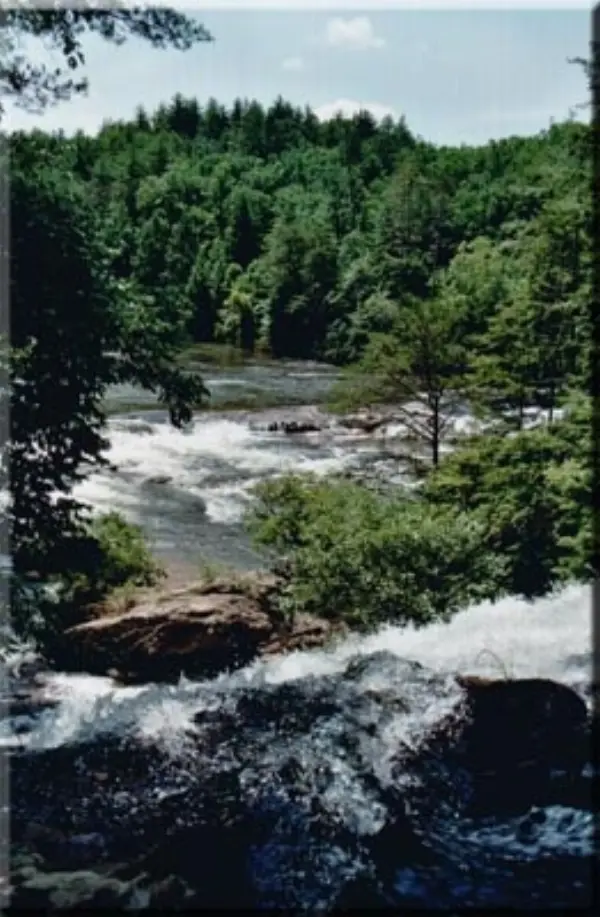
This page lists 19 river swimming holes in Vermont, where the swim season runs mid-june through early september. Open each listing for directions, fees, and current conditions before you travel.
Vermont has 19 documented river swimming holes in this directory — a river swimming hole is a deep bend, eddy, or slack-water pool in moving water — the pocket beside the current rather than the current itself. The Vermont swim season runs Mid-June through early September, peaking July to August. Access points cluster near Brattleboro, Springfield, Rockingham, Cavendish, and Ludlow. Every listing below links to a full page with directions, fee notes, access rules, and safety context.
Brockways Mills Gorge is a river swimming spot on Williams River near Brattleboro, Vermont. What people come for: Crystal-clear waters; Dramatic rock formations. Access is free, and there are no facilities on site. Best visited in June to August. Water conditions can change rapidly.
Carved over millennia by the Black River, this dramatic gorge cuts through ancient rock with a quiet authority, offering one of the most visually striking natural .
Clarendon Gorge Swimming Spots, Vermont lies in Vermont, where Mill River moves through a wooded corridor. The Mill River has spent millennia carving its way through the bedrock here, leaving behind a dramatic channel of sculpted stone, deep cold pools, and sheer rock faces that seem almost too.
There are no crowds, no entrance booths, and no manicured facilities. Just cold, clear Vermont river water and the steady sound of current moving over stone.
Scattered along the banks of the West River and Rock River in Southern Vermont, the Dummerston Region . These are unofficial, unhurried spots where the water runs cold and clear, the forest leans close overhead, and the only agenda is the afternoon itself.
East Middlebury Gorge is a clear Middlebury River swimming hole in Vermont with rock ledges and cold mountain water near Middlebury and East Middlebury. Free informal access — check depth before any jump.
Felchville Vermont Swimming Holes lies in Vermont, where North Branch Black River moves through a wooded corridor. These are places you stumble upon and remember for years.
Lamoille River Valley Swimming Holes near Stowe, Vermont is a river swimming spot on Lamoille River. What people come for: Jeff Falls' 7-foot waterfall; Secluded pools at Brewster River Gorge. You will find parking. Best visited in June to August. Always enter feet-first.
Mad River Area near Montpelier, Vermont is a river swimming spot on Mad River, Lincoln Brook. What people come for: Crystal-clear waters; Natural rock slides. Access is free, and you will find restrooms and camping. Best visited in Summer. Assess water conditions upon arrival.
A name as lyrical and untamed as the landscape it carves through. Winds quietly through the hills of eastern Vermont, passing through small villages and dense forest before emptying into the Connecticut River.
QUECHEE GORGE is a river destination on Ottauquechee River in VT near White River, Woodstock, Quechee. Fee note: None. Confirm current access and conditions before you go — no lifeguards at informal spots.
Rochester is a river swimming spot on Branch of White River near Rutland, Vermont. What people come for: Cool, clear water ideal for swimming and tubing; Accessible location near Rochester, VT. Best visited in September-October. Always scout the river current and depth before entering.
Stockbridge Vermont River Swimming Holes near Rutland, Vermont is a river swimming spot on White River, Tweed River. What people come for: Crystal-clear waters of White and Tweed Rivers; Natural rock slides for adventurous fun. Access is free, and there are no facilities on site. Best visited in spring. Always check water conditions and depth before entering.
The Cornfield lies in Vermont, where West River moves through a wooded corridor. There are no signs announcing its presence, no entry gates, no snack bars.
This unofficial, undeveloped spot sits between the towns of Brattleboro and Guilford, offering a genuinely rustic river experience far removed from manicured beaches and crowded pools.
Tolles Hill Dam is a dam swimming spot on Black River near Ludlow, Vermont. What people come for: Cool and refreshing Black River waters; Scenic forested surroundings. Best visited in Summer. Exercise extreme caution around the dam structure.
Vermont is unusually dense with swimming holes — the Mad, White, Lamoille, Winooski, and Deerfield corridors, the Warren Falls and Bristol Falls ledges, Bingham Falls near Stowe, and the Ledges on Lake Willoughby.
Schist and granite ledge pools running clear and cold, typically low to mid-60s°F.
Reading conditions before you go
Check the nearest USGS gauge before you drive. Flow in cubic feet per second tells you more than any photograph: a stretch that is a calm green pool at 200 cfs can be an unswimmable chute at 900 cfs.
Give a river 24 to 48 hours after heavy rain. Runoff raises both the current and the bacteria count, and it pushes new strainers — submerged trees and branches — into places that were clear last weekend.
Read the surface. Smooth, glassy water moving fast is stronger than choppy water. A line of foam or debris shows you where the main current runs; swim on the inside of the bend, not the outside where the channel scours deep.
In Vermont, the Vermont Department of Environmental Conservation publishes the water-quality and algal-bloom advisories that apply to these waters. Check them alongside the live gauge data rather than instead of it.
River safety in Vermont
If the current takes you, do not try to stand up. Foot entrapment in moving water is a common drowning mechanism. Roll onto your back, point your feet downstream to fend off rocks, and ferry across the current at an angle rather than fighting it head-on.
Strainers are the river hazard people underestimate — a fallen tree lets water through and holds a body against it. Stay well upstream of any woody obstruction.
Avoid swimming below low-head dams entirely. The recirculating hydraulic at the base is uniform across the width and is very difficult to escape.
Vermont holes are ledge-and-pothole terrain and jumping injuries are the norm — depths shift between seasons as gravel moves. Rivers rise very fast in summer thunderstorms, and several popular spots have parking restrictions enforced by towns.
Cold water deserves more respect than most swimmers give it. The National Weather Service notes that cold shock can be as severe at 50-60°F as at 35°F, and that the involuntary gasp reflex can be triggered by water as warm as 77°F — which is why entering slowly matters even on a hot day.
When to go
Vermont swims mid-june through early september, with the most reliable water july to august. Warm afternoons in June and early September work at the lower-elevation holes.
Rivers peak in danger during runoff and peak in quality in late summer, when flow drops and pools clear and warm.
19 of these listings carry their own best-time note from the land manager or from reader reports — open them for the specifics rather than relying on the state-wide window alone.
What to bring: Sticky-soled water shoes, a dry bag, and a throw rope if your group swims regularly in current.
How many river swimming holes are there in Vermont?
We document 19 river swimming holes in Vermont. That is the number with enough verified detail — access, directions, and conditions — to publish, not the total number that exist. They cluster near Brattleboro, Springfield, Rockingham, and Cavendish.
When is the best time to swim river spots in Vermont?
Mid-June through early September, with the best conditions july to august. Warm afternoons in June and early September work at the lower-elevation holes. Rivers peak in danger during runoff and peak in quality in late summer, when flow drops and pools clear and warm.
Are Vermont river swimming holes free?
Of the 19 listed here, 14 free, 5 varies. Fees are usually a state park or day-use charge rather than a swimming charge, and they change season to season — open the individual listing before you drive.
What should I check before swimming in Vermont?
Three things: the live flow or level at the nearest USGS gauge, the current advisories from the Vermont Department of Environmental Conservation, and the forecast for anywhere upstream of you. Vermont holes are ledge-and-pothole terrain and jumping injuries are the norm — depths shift between seasons as gravel moves. Rivers rise very fast in summer thunderstorms, and several popular spots have parking restrictions enforced by towns.
Is it safe to swim in Vermont river spots after rain?
Generally no, not straight away. Runoff raises the current, pushes new debris into familiar pools, and spikes bacteria counts. Give moving water 24 to 48 hours to clear after heavy rain.